You are here: » Christianity in View » Introduction to the Orthodox Church » Timeline
 Timeline
| c.4 BC | Birth of Jesus Christ, in Bethlehem. |
| c.30 AD | Death of Jesus Christ. |
| c.33 | Pentecost and the coming of the Holy Spirit (Acts 2). Sometimes known as the Birthday of the Church. |
| c.33 | Stephen – First Christian martyr (Acts 7). |
| c.48 | Council of Jerusalem (Acts 15). Gentile Christians accepted alongside those in the Jewish tradition. |
| c.60 | First Gospel published (often thought to be that written by Mark). |
| 62 | Martyrdom of James, “The Lord’s Brother”. |
| c.67-68 | Apostles Peter and Paul* martyred in the reign of the Roman emperor Nero. |
| 70 | Jewish rebellion against the Roman empire ends. Destruction of the temple in Jerusalem. |
| From 70 | Centre of Christianity moves to Antioch, Alexandria and Rome. |
| c.90 | Book of Revelation and Gospel of Saint John written. |
| 161-80 | Widespread persecution of Christians under Roman emperor Marcus Aurelius. (Severe persecutions also occurred under the emperors Decius (249-251) and Diocletian (284-305)). |
| 301 | Armenia becomes the world’s first country to officially adopt Christianity as the state religion. |
| 312 | Roman emperor Constantine receives a vision of a flaming cross with the words ‘In hoc signo vinces’ : ‘By this sign conquer’. Defeats rival Maxentius at the Battle of Milvian Bridge. |
| 313 | Edict of Milan issued by Constantine – Christianity becomes a legal religion within the Roman empire. |
| 325 | Constantine calls the first ecumenical council at Nicea. Arian heresy which declared Christ was a created being is refuted. Nicene Creed is drawn up, declaring Christ to be “…Begotten, not made; of one essence with the Father…” |
| 367 | Saint Athanasius is the first to list all 27 New Testament books in his festal letter. |
| 381 | Ecumenical Council at Constantinople revises the Nicene creed to its current form. |
| c.382 | Saint Jerome begins a translation of the Bible into Latin. |
| 397 | Synod at Carthage ratifies the 27 books of the New Testament as sacred scripture. |
| 431 | Ecumenical council held at Ephesus refutes Nestorianism. (The doctrine that Christ was two persons (one human, the other divine) in one body). Mary is declared Theotokos i.e. ‘God-bearer’ or more commonly, ‘Mother of God’. |
| 451 | Ecumenical council at Chalcedon affirms Christ as having two distinct natures united in one person (known as the ‘Hypostatic Union’). |
| 553 | Ecumenical council at Constantinople affirms teaching of previous councils. |
| 589 | To refute Arianism, the filioque (Latin: ‘and the son’) was added to the Nicene-Constantinopolitan Creed at a council in Toledo. |
| 636 | Capture of Jerusalem by Muslim Arabs after Battle of Yarmuk. |
| 641 | Capture of Alexandria and subesquent conquest of Egypt by Muslims. |
| 663 | Emperor Constans II is last Eastern emperor to set foot in Rome. |
| 680-81 | Ecumenical council at Constantinople rejects Monothelite heresy of one will in Christ. |
| 787 | Ecumenical council at Nicea ends the controversy over the use of icons in worship. |
| 843 | Triumph of Orthodoxy occurs on first Sunday of Great Lent, restoring icons to churches. |
| 861 | Cyril and Methodius begin their missionary work among the slavic peoples. |
| 867 | At a council held at Constantinople, Patriarch Photius declares Pope Nicholas I anathema following conflict over missionary work in Bulgaria and the filioque. |
| 879-880 | Ecumenical council at Nicea – confirms Photius as patriarch and rejects the filioque. |
| 885 | Mount Athos obtains political autonomy. |
| 988 | Conversion of Prince Vladimir in Kiev. Growth of Christianity in Russia. |
| 1014 | Use of the filioque for the first time in Rome, by Pope Benedict XIII. |
| 1054 | Great Schism – Eastern Orthodox and Western Catholic churches separate. |
| 1084 | Capture of Antioch by Seljuk Turks. |
| 1095 | Pope Urban II authorises the first Crusade to recover the Holy Land from Moslems. |
| 1099 | Crusaders conquer Jerusalem. |
| 1187 | Jerusalem recaptured by a Moslem army led by Saladin. |
| 1204 | Sack of Constantinople during the fourth crusade. |
| 1261 | End of Latin occupation of Constantinople and restoration of Orthodox patriarchs. |
| 1269 | Orthodox patriarch returns to Antioch after a 171-year exile. |
| 1274 | Second Council of Lyons held, proclaiming union between the Orthodox East and the Roman Catholic West, but generally unaccepted in the East. |
| c.1341 | Defence of Orthodox spirituality by Gregory Palamas. Rise of Hesychasm. |
| 1410 | Iconographer Andrei Rublev paints an icon depicting the three angels who appeared to Abraham and Sarah, the angels being considered a type of the Holy Trinity. |
| 1439 | Ecclesiastical reunion with West attempted at Council of Florence, but subsquently fails. |
| 1448 | Independence of Russian Orthodox Church from the Church of Constantinople. |
| 1453 | Fall of Constantinople to the Ottoman Turks. |
| 1568 | Pope Pius V recognizes four Great Doctors of the Eastern Church, John Chrysostom, Basil the Great, Gregory of Nazianzus, and Athanasius. |
| 1698 | Consecration of the First Orthodox Church in China. |
| 1794 | Orthodox Missionaries arrive in Alaska. |
| 1821 | Independence of Greece. |
| 1965 | Mutual anathemas of 1054 between Roman Catholic and Orthodox churches lifted. |
| 2008 | Pan-Orthodox meeting in Constantinople. |
| 2008 | Publication of the Orthodox Study Bible. |
* See the Timeline of Paul’s ministry for more information.
More Information:
Here is a selected series of links that will give more information:
Wise words:
“In spite of our sinfulness, in spite of the darkness surrounding our souls, the Grace of the Holy Spirit, conferred by baptism in the name of the Father and the Son and the Holy Spirit, still shines in our hearts with the inextinguishable light of Christ … and when the sinner turns to the way of repentance the light smooths away every trace of the sins committed, clothing the former sinner in the garments of incorruption, spun of the Grace of the Holy Spirit. It is this acquisition of the Holy Spirit about which I have been speaking. ”
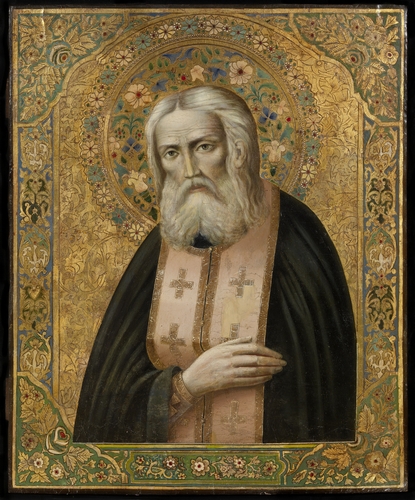
St. Seraphim of Sarov
(1759-1833)